
Meta announces realistic Hologram avatars coming to Ray-Ban glasses this fall and VR headset in spring 2027
Meta has set a timeline to ship Hologram, its take on Apple Vision Pro's Personas. A shoulders-up version arrives on Meta Ray-Ban Display in early access this fall for WhatsApp calls, while full-body Holograms will launch on Meta VR Glasses in spring

Meta has finally committed to a concrete timeline for Hologram, its realistic avatar system built on seven years of research into synthetic video representations of users.
After years of showing off improvements to Codec Avatar prototypes while shipping cartoonish avatars in commercial VR products, Meta will debut Holograms first on Meta Ray-Ban Display glasses, then on Meta VR Glasses in spring 2027. The launch version will not be a fully volumetric implementation, but rather a real-time AI diffusion model that generates synthetic video.
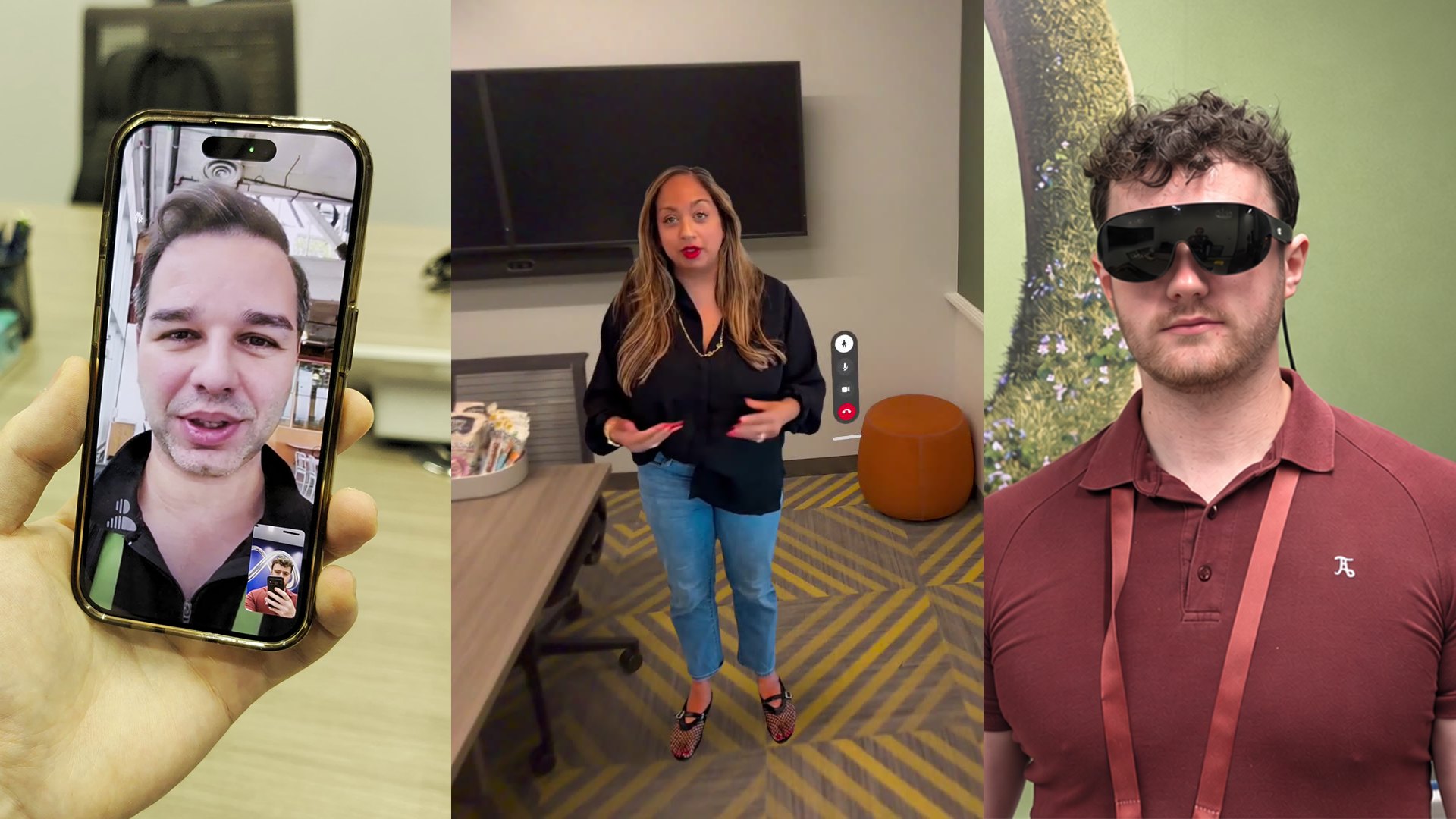
On Meta Ray-Ban Display, Hologram will be shoulders-up only and arrive in early access in the US this fall for WhatsApp video calls. Users set up their Hologram by holding a smartphone with the Meta AI app open, turning their head in various directions, and providing expressive spoken answers to open-ended questions. The system captures facial expressions and incorporates clothing and background. After a few minutes of server-side processing, the Hologram is ready for calls.
During WhatsApp video calls on the Ray-Ban glasses, the other person sees a synthetic version of the caller, with facial expressions derived entirely from microphone input. UploadVR's demo showed a Meta employee whose Hologram appeared convincingly realistic on a phone screen, initially resembling a standard selfie camera feed rather than a synthetic avatar.
Meta plans future improvements, including using the glasses' gyroscope to drive head rotation, sampling the camera for dynamic backgrounds, and allowing users to change clothing through text prompts instead of setting up new Holograms.
On Meta VR Glasses, Holograms will support full-body avatars at true scale in 3D. When two Meta VR Glasses users call each other on WhatsApp, they first see each other's Holograms in a 3D window, then can tap to switch to full-body mode with the other person appearing in front of them.
The full-body version uses the same real-time AI diffusion approach as the Ray-Ban version but generates stereoscopic 3D video instead of 2D. In demonstrations, the system worked well for seated or standing users but broke down visually when movement occurred, as the Hologram rotated to always face the viewer like a billboard sprite from older video games.
Meta confirmed that the launch version of Hologram on VR Glasses will not be truly volumetric. However, the company plans a post-launch upgrade to convert it to volumetric delivery, enabling true co-presence and group conversations. At that point, Holograms will supersede Meta's cartoon avatars, which are no longer in development.
Meta VR Glasses will feature 2.4K micro-OLED displays, weigh 100 grams, and connect to a tethered puck powered by Qualcomm's Snapdragon Reality Elite chipset. The headset launches in spring 2027 at $1,300.
Sources
- UploadVREstablished publication · recorded Sep 25, 2026Hologram: Meta Is Finally Set To Ship Realistic Avatars, And We Tried Them