
Stranger Than Heaven developers explain visceral combat, historical context, and why it's not a Like a Dragon sequel
RGG Studio's upcoming historical action-adventure spans 50 years across five Japanese cities and eras, featuring a distinctive left-right body-split combat system designed to emphasize immersion over flashiness.

Stranger Than Heaven represents a deliberate departure for RGG Studio, the developer behind the Like a Dragon franchise. The new historical action-adventure is set across five eras and five cities in Japan, spanning 1915 to 1965, and follows two men of mixed Japanese and Western heritage whose personal stories eventually lead to the founding of the Tojo Clan.
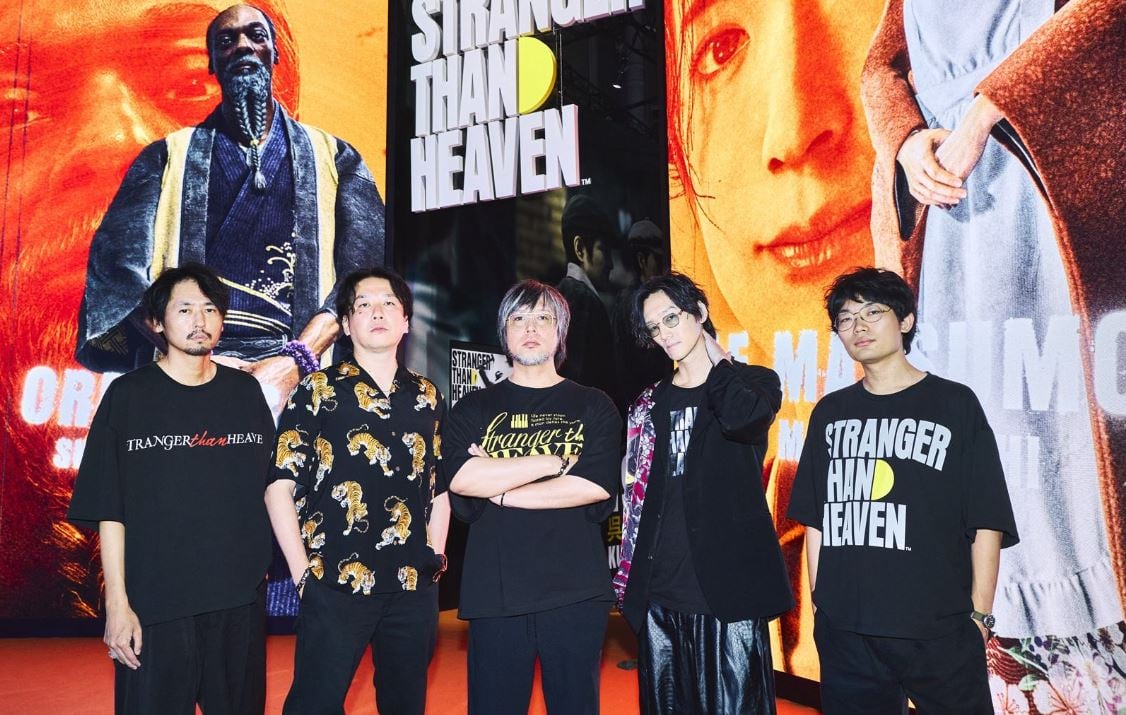
During Tokyo Game Show 2026, Automaton had the opportunity to play an updated demo and speak with five key members of the development team about the game's distinctive features and philosophy.
A different approach to immersion
Stranger Than Heaven prioritizes rawness and immersion over the spectacle of previous RGG Studio titles. Shopping no longer uses list-based menus; players now seamlessly select products displayed outside shops. Street fights develop naturally without character name displays or cinematic cut-ins, creating the feel of an actual brawl rather than a choreographed encounter.
The most striking feature is the combat system's left-right body-split controls. The upper left and right buttons and triggers on the controller correspond to the protagonist's respective body halves. Depending on equipped weapons, players can strike with their right hand or punch with their left. When an enemy is knocked down, both triggers can be pulled to mount and pummel them. Guarding with Circle protects both hands, while combining it with the upper buttons allows one-handed guards that can parry if timed correctly.
These controls create a visceral sense of immersion. Animations emphasize physical movement rather than snappy button presses. Rather than a protagonist snapping into action, there's a tangible sense of winding up and throwing each punch. Unlike previous RGG Studio games, combat lacks flashy attacks with auras or acrobatic moves. Instead, blood splatters and brutal animations create a vivid sense of desperate survival.
Historical context shapes brutal encounters
Director Masayoshi Yokoyama acknowledged that battles are depicted at a level where players might think the protagonist killed someone, despite no explicit on-screen depictions of killing. The reasoning stems from historical setting. "For example, if you get into a fight in modern society, you're aware that crossing a certain line can mean committing a particular crime," Yokoyama explained. "But the era we're depicting this time is one where, 'if you don't kill them, they'll kill you in retaliation.' We wanted to portray that and let players experience what it feels like to live in an era where 'if you don't do it, you'll be the one who gets done in.' That's a major reason why the battles are designed in such a rough and brutal way."
This approach differs from the Like a Dragon series, where protagonists like Kiryu explicitly don't kill. Yokoyama noted that while Daito isn't acting with the purpose of killing people, the historical context justifies the intensity of combat design.
Casting choices serve narrative purpose
The game features notable casting, including Snoop Dogg as Orpheus and Tupac as Amaru. Yokoyama emphasized these weren't purely publicity moves. "His character's role is to discover the protagonist's talent, meaning he's someone who influences the protagonist's way of life and ultimately plays a role in determining his future," Yokoyama said of Snoop Dogg's character. "And the talent in question is the musical talent for 'sound,' so I think there are very few people in the world who could portray such a character convincingly. We decided to cast Snoop Dogg because we felt there was no one else who could both act and bring that level of credibility to the role."
The Tupac announcement at Summer Game Fest generated significant response due to his international recognition. Yokoyama acknowledged the impact: "The buzz in the venue when we announced it was incredible, and it became a major topic of conversation. It reminded us once again just how influential an artist he is."
Aging and character design challenges
The game depicts protagonist Makoto Daito across multiple life stages, from a young man to an older figure who has lost youthful vigor. Art director Taishi Kanaya identified the youngest version of Daito as the most difficult to design, particularly given his mixed Japanese and American heritage. The baseline design was established using Daito's middle-aged appearance during his Minami, Osaka period (1943), which appears in the key visual.
The development team spent considerable time on character artwork and design discussions to ensure each age felt authentic and believable across the 50-year span.
Sources
- AUTOMATON WestEstablished publication · recorded Sep 29, 2026Stranger Than Heaven developers talk about breaking away from action game conventions, why it isn’t a Like a Dragon entry, and making long, worthwhile games in an “era of time-efficiency”