
Black Myth: Wukong's publisher PM Studios faces PlayStation disc crisis as Sony ends production in 2028
PM Studios, the physical publisher behind Black Myth: Wukong's massive success, is adapting to Sony's decision to cease PlayStation disc production in January 2028. CEO Michael Yum calls the shift "sad and devastating" but sees opportunity in premium

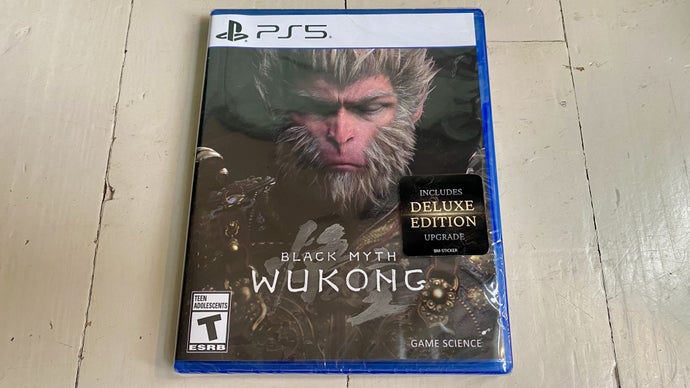
PM Studios built its business on physical game publishing. For two decades, the Las Vegas-based publisher has brought titles to disc and cartridge, from the Korean rhythm-action series DJMax in its early days to a portfolio that now includes roughly a hundred or more games per year. That model has worked. But Sony's announcement that PlayStation disc production will end in January 2028 threatens to undermine the entire foundation.
The timing is particularly painful. Just as PM Studios experienced unprecedented success with Black Myth: Wukong, one of the year's biggest releases, the physical market for console games faces an existential challenge. CEO Michael Yum told GamesIndustry.biz that he regarded Black Myth as "one of our biggest risks" when PM Studios took on physical publishing duties. The outcome exceeded all expectations. "I didn't know it was going to be that big," Yum said. "When it took off, yeah, it was quite an experience. I've never seen anything like that." The single title was so massive it "covered everything else" in the publisher's portfolio.
Yet the irony is stark. Just as PM Studios proved the viability of physical publishing at scale, the rug has been pulled out. "It's sad and devastating," Yum said. "My first games were on PlayStation, and I'm primarily a PlayStation player, so obviously I play a lot of physical games on PlayStation." He noted that younger, digital-native players "get confused about putting the disc in," a generational shift reflected in broader market trends.
Despite digital games accounting for the majority of sales worldwide, Yum pointed out that substantial physical markets remain. PM Studios published Bluey's Quest For The Gold Pen, which sold roughly 80 percent of its copies in physical form. Big intellectual properties "do very well at retail," and there's healthy demand for physical editions of indie titles that have already succeeded digitally. When PM Studios released a mass retail version of Animal Well with Lost in Cult, it performed extremely well, even after a limited-edition release through Limited Run. "The fans come back to support the physical version of the game," Yum said. "The collectors are buying stuff."
There's also an economic dimension. Physical games can be shared among family members rather than tied to a single account. "I have twins, so I have a unique case where I don't want to buy two digital copies of the game," Yum explained. "So I buy one, and they learn to share it and let their friends borrow it." But beyond economics, he believes the outcry reflects something deeper. "People are very upset because you're taking away a choice."
PM Studios is adapting. The publisher is exploring "code in a box" models and emphasizing collectibility through premium packaging and bundled merchandise. "We are looking for new ways to bring the games out," Yum said. "It's unfortunate, but eventually it will have to probably be a code in a box. We want to emphasise the collectibility of the IPs and fan service, so we'll probably make very nice premium stuff and bundle it together, and figure out unique ways to support it." The company is also expanding into digital publishing, taking on full publishing duties for titles like My Time at Evershine.
PM Studios remains committed to physical releases where possible. The publisher is behind the upcoming physical version of AdHoc Studio's Dispatch and recently launched the community platform Panax for collectors of physical games and merchandise. "We've been developing it for years now," Yum said, noting that the platform went viral thanks to a trophy tracking feature.
Impressed by Black Myth: Wukong's success, PM Studios is also taking bigger risks on AA games, a segment the publisher sees as having considerable potential. The market for indie and AA titles benefits from the sheer number of games available in digital marketplaces, which makes differentiation difficult. "People tend to look at the flashier stuff," Yum observed. "So it just happens to attract people more easily." AA games, with their higher production values, stand out more readily than smaller indie projects.
PM Studios remains "a big champion" for indie games and is supporting developers on Switch 2. The publisher was among the first to release games for Nintendo's new console on physical cartridge. The strategy involves using success from larger games to fund newer indie titles, though Yum acknowledged the inherent risk. "We will make sure that it has something to it, like either an IP attached, or it's a sequel to something, or the developer was very credible, or the wishlists were there. Anything we can do to help reduce some of that risk."
Yum has been particularly impressed with AA games emerging from China, both in quality and development speed. "I've been working a lot with Chinese developers," he said. "To be honest with you, it's incredible. The developers, they are fast, they're very, very fast. They're very hungry and they're very talented. They can make anything so amazing right now." He noted that Chinese developers are setting industry benchmarks for speed and cost-efficiency, with major firms like Tencent and NetEase owning significant portions of the global gaming industry.
Most of PM Studios' upcoming releases are from Western developers, however. The publisher is working with Telltale on The Wolf Among Us 2, where PM Studios is providing funding and operational support to help the studio complete the long-delayed sequel. "The biggest part was funding," Yum said. "I told them that I can help invest and fund this game, and I could bring in my marketing team and production team operations to help finish the game in a timely manner."
PM Studios isn't alone in navigating the shift away from physical releases. Other companies built primarily around physical distribution are adapting through new business models. What remains clear is that while physical console gaming is in transition, collectors, families, and fans of specific franchises still value the ability to own and share physical copies. For PM Studios, the next chapter means reimagining what physical publishing looks like when discs are no longer an option.
Sources
- GamesIndustry.bizEstablished publication · recorded Sep 21, 2026"It's sad and devastating" – Black Myth: Wukong's physical publisher is mourning the loss of PlayStation discs