
Museas and Astronoma Bring Immersive Art and Space Education to Apple Vision Pro
Developer Miguel Garcia Gonzalez discusses how his Apple Vision Pro apps blend curiosity-driven design with factual content to create engaging educational experiences.

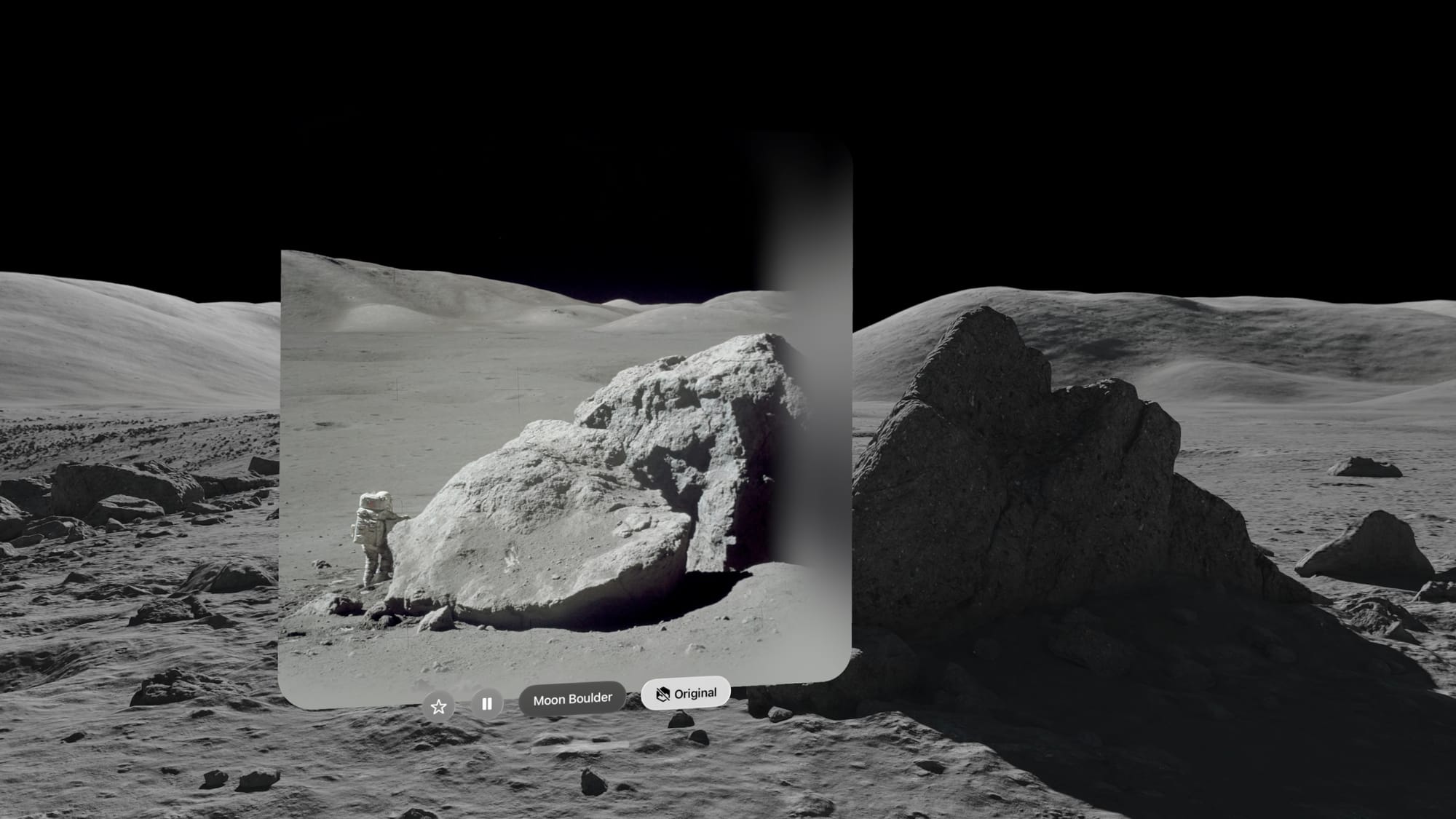
Spatial apps designed with intentional focus on curiosity and discovery feel more like engaging experiences than traditional educational lessons. Museas and Astronoma, both developed by Miguel Garcia Gonzalez, founder of Augmenos, exemplify this approach on Apple Vision Pro. Museas brings centuries of art history into users' homes, while Astronoma offers a unique form of space exploration. Both apps use real-world source material and factual information to encourage exploration and repeat visits, particularly as new content is added.
Gonzalez emphasized that learning new subjects becomes significantly more engaging when experienced through immersive technologies. "Learning a new subject can be difficult, but that experience is much more engaging when done with immersive technologies," he explained. "It shouldn't have to feel like a tedious lesson, but rather a curious journey that you happen to learn from in the end." His design approach starts with creating "wow" moments that capture awe, then layers in elements that allow users to freely explore at their preferred depth and scale. To prevent overwhelming users with options, Gonzalez compartmentalizes specific content through exhibitions, allowing users to pursue particular subjects of interest.
The developer noted that not all content requires spatial presentation. "There is a lot of content in art and science that is better presented in 3D, which no phone or tablet can produce as well as a mixed reality device," Gonzalez stated. Using newer Apple APIs like Spatial Scenes, he selectively converts artworks and space images into 3D, choosing treatment only for content that presents well in this format. In Astronoma, for example, the Sputnik 1 spacecraft appears in 3D while complementary content like archival images and diagrams remain planar in spatial coordinates, centering attention on the 3D elements without peripheral distractions.
Design choices serve to support educational content rather than compete with it. Atmospheric elements like background music tied to thematic scenes—such as drums in Museas's "Artifact Room" or ethereal notes in Astronoma's "Nebula" environment—add layers of emotional connection to content. Gonzalez emphasized that "the educational content is the star, and a flawless design needs to support that."
Authenticity remains paramount in both apps. Augmenos apps integrate real-world scans of artifacts and photographs, with Gonzalez pushing quality further by incorporating actual data throughout. The recent Space Station environment in Astronoma was constructed from real ISS orbital data and NASA space imagery, designed natively using Reality Composer Pro and its shader graph editor, with RealityKit in the backend. Performance optimization enables users to change the sun's position in real-time while keeping the experience grounded in actual science.
Sources
- UploadVREstablished publication · recorded Sep 8, 2026Museas & Astronoma On Apple Vision Pro Support Curiosity & Discovery
- UploadVREstablished publication · recorded Sep 8, 2026Fovii Showcases Immersive Videos And Their Creators On Apple Vision Pro