
“I wish I was better”: The downfall of Fnatic’s VALORANT team
After years of regional dominance and global success, Fnatic's VALORANT team experienced a shocking 2026 season filled with meta struggles and roster changes.

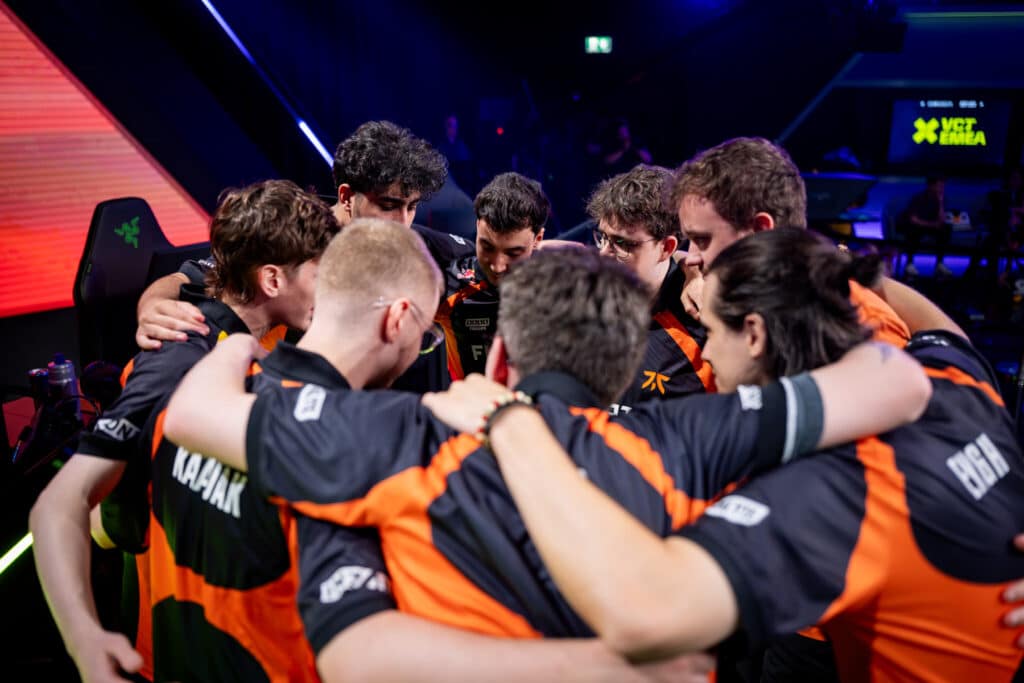
For many years, Fnatic stood as the benchmark of excellence within the VCT EMEA circuit. Boasting two international trophies and a history of consistent global VCT appearances, the organization served as a shining beacon of regional strength amidst a wider landscape where EMEA struggled relative to other powerhouse regions. Heading into the 2026 competitive season following back-to-back top-two international finishes the previous year, expectations for the squad were exceptionally high. However, an unexpected and dramatic reversal of fortune unfolded, resulting in the team failing to qualify for any of the three global VCT competitions throughout the year. This unprecedented dry spell left the VCT community stunned, raising critical questions about how a premier franchise could miss out on VALORANT Champions for the first time in history.
The trouble began before a shot was even fired in the 2026 VCT season, when Fnatic faced the monumental task of replacing Timofey “Chronicle” Khromov, an integral veteran and one of the most accomplished players in professional VALORANT history. Following the departure of Nikita “Derke” Sirmitev a year prior, Chronicle also made the switch to Team Vitality. To fill the vacancy, Fnatic turned to former Gentle Mates player Sylvain “Veqaj” Pattyn. While Veqaj was initially an unknown quantity to many fans, he left a strong impression during the organization's off-season event alongside INZONE. Despite this addition, competitive hurdles quickly manifested once official matches commenced.
During the VCT EMEA Kickoff under the new triple-elimination format, Fnatic dropped to the middle bracket immediately following an opening series against BBL Esports. Early indicators pointed toward an inability to adapt to VALORANT's fast-paced, micro-focused meta, as the squad stubbornly adhered to its preferred slow-paced, default-heavy playstyle. Mid-competition adjustments, including rushed double-duelist team compositions, failed to look refined on stage. Furthermore, strategic decisions—such as omitting star player Emir “Alfajer” Beder from duelist or Chamber roles on select maps—drew heavy criticism. Map pool vulnerabilities also became apparent, with Corrode proving particularly problematic before a Lower Bracket Final defeat against Team Liquid.
Although Fnatic engineered an impressive 5-0 win streak to claim the top group seed in VCT EMEA Stage 1, a brutal awakening awaited them in the Playoffs. Despite fielding last-minute substitutes, including Assistant Coach Casper “Desmo” Rasmussen and later Clément “CyvOph” Millard in place of Veqaj, underlying systemic weaknesses finally caught up with the roster. Analysts pointed out that the team failed to recognize the shifting value of agents like Vyse over traditional Sentinels, leaving them far behind the current meta. The lack of rigorous testing during the Group Stage left Fnatic ill-prepared for the high-stakes pressure of the Playoffs, culminating in consecutive losses and a swift elimination.
The compounding pressure took a severe emotional toll on the roster, highlighted by a candid, heartbreaking interview given by in-game leader Jake “Boaster” Howlett to independent journalist Pedro Romero. Reflecting on the accumulation of lost finals and ongoing mental struggles, Boaster shared the heavy burden he carried, stating that he often blamed himself for game losses and concluding with the poignant admission, “I wish I was better.” On September 8, 2026, Fnatic shocked the community further by announcing that it would allow its VALORANT players, including Boaster, to explore other opportunities as the organization evaluates its direction for the 2027 offseason.
Sources
- Esports InsiderEstablished publication · recorded Sep 9, 2026“I wish I was better”: The downfall of Fnatic’s VALORANT team