
Post-Apocalyptic RPG Entropy Draws Inspiration From Fallout, Mordheim, and Tabletop Gaming
Early access RPG Entropy blends JRPG sensibilities with tactical depth and PC gaming design philosophy, taking cues from original Fallout and the abandoned Warhammer spinoff Mordheim.

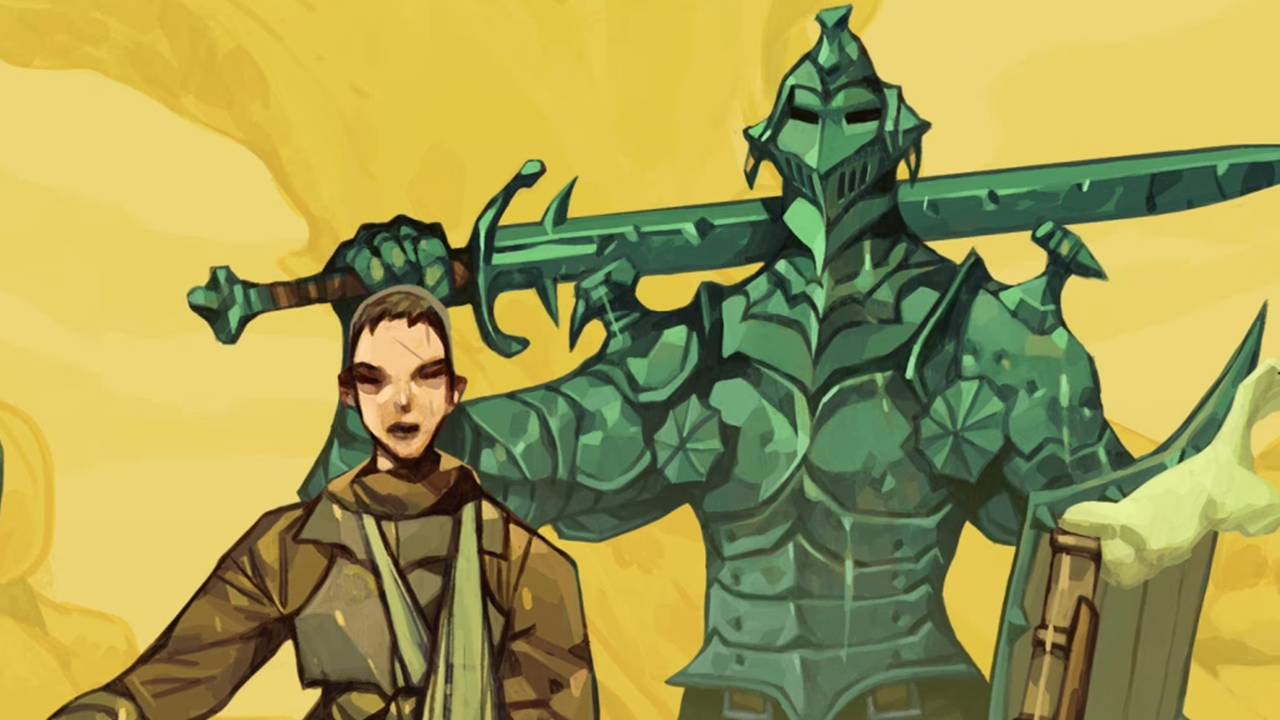
The early access RPG Entropy represents a significant departure from developer Lovely Hellplace's previous work. While Dread Delusion paid homage to first-person RPGs like King's Field and The Elder Scrolls, Entropy embraces a distinctly JRPG-influenced aesthetic reminiscent of Final Fantasy 10 or Lost Odyssey. However, the game transcends simple genre categorization through its blend of large party sizes, tactical battles, permadeath mechanics, locational damage systems, and a reactive storytelling approach rooted in PC gaming design rather than PS2-era conventions.
Lead developer James Wragg explicitly frames Entropy as his interpretation of the original Fallout. "In many ways, if Dread Delusion was my take on The Elder Scrolls, then this is my take on Fallout," Wragg explained. "The original Fallout, Fallout 1, is one of my favorite games, and we're riffing on that quite a lot with Entropy." The locational damage system directly mirrors Fallout's called shots mechanic, allowing players to incur accuracy penalties when targeting specific enemy limbs or zones in exchange for greater damage or debilitating effects. Wragg provided examples of advanced battle applications, such as disarming opponents wielding powerful weapons or targeting weakpoints on mutated enemies similar to Resident Evil's design philosophy.
Entropy's post-apocalyptic setting shares aesthetic and tonal DNA with original Fallout—desolate, immediate, and sparse in levity, with remaining humor functioning as relics of the pre-collapse world. This artistic direction extends to the game's opening scene. Beyond Fallout, Wragg cited Mordheim, the long-abandoned Games Workshop tabletop tactics spinoff first published in 1999, as a major creative influence. Mordheim's small-unit tactics framework and emphasis on character customization particularly resonated with the developer's design philosophy.
Wragg emphasized that tabletop gaming's inherent flexibility and house-ruling culture inspired Entropy's approach to systems design. "What I love about tabletop is, it's just pen and paper," he noted. "You can house rule stuff as much as you want." This creative freedom translated into Entropy's character customization depth, which Wragg argued often surpasses video game implementations due to tabletop's freedom from coding graphical and animation constraints. Entropy's low-fidelity visual style enables similar flexibility, allowing the developers to implement numerous unique weapons and status effects without requiring extensive asset and animation work. "I think if we were working in more high fidelity, we would have had to rein in that ambition a bit," Wragg explained.
The developer traced his design methodology to foundational research into tabletop gaming history conducted during early hobby-level development of Dread Delusion. "If you're designing an RPG, you have to go back to the source on tabletop games because so many of the systems that exist within modern AAA RPGs, they originated with Dungeons & Dragons and all those other spin-off games and war games," Wragg stated. This commitment to understanding gaming fundamentals informs Entropy's systematic approach, with Wragg emphasizing that RPGs have not substantially deviated from their tabletop origins despite decades of technological advancement.
Entropy is currently available in early access on Steam alongside a substantial free demo. During development, Wragg and his team discovered an affinity for sidequests that ultimately expanded the game's scope beyond their original wordcount targets.
Sources
- PC GamerEstablished publication · recorded Sep 8, 2026'If you're designing an RPG, you have to go back to the source:' The post-apocalyptic RPG Entropy takes notes from Fallout and a long-abandoned Warhammer spinoff