
Dragon Quest Heroes: Torneko's Mystery Dungeon -Classic HD- finally brings the genre's original to English
The Mystery Dungeon series started with Torneko, a Dragon Quest shopkeeper who uprooted his family to explore a supernatural dungeon. Nearly 40 years later, the original game is officially available in English for the first time on Switch 2, though the

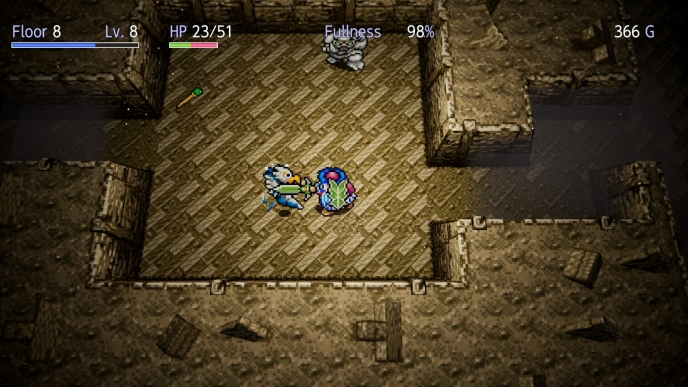
The original Mystery Dungeon is finally officially available in English. Announced during September's Nintendo Direct, Dragon Quest Heroes: Torneko's Mystery Dungeon -Classic HD- marks the first official English localization of a game that defined an entire genre.
This 1987 Super Famicom spinoff from Dragon Quest 4 introduced the roguelike formula that would later spawn Chocobo's Dungeon, Shiren the Wanderer, and Pokemon Mystery Dungeon. In the original game, Torneko is not a great hero but an item shop owner with a modest goal: support his wife and child by becoming a masterful shopkeeper. When rumors of a mysterious dungeon surface in a distant kingdom, the entire family relocates. After proving his capability to the local king, Torneko gains permission to explore the supernatural space that shifts with each entry and holds untold treasures.
The gameplay follows the roguelike blueprint now familiar to modern players. Turn-based movement and attacks alternate with the dungeon's turn, during which monsters and environmental hazards respond. Death carries real consequence. Items remain unidentified until used, forcing players to gamble with random wands and herbs. Defeat sends you back to floor one at level one, stripped of equipment. The only consolation is a boxed lunch from Torneko's wife.
What distinguishes these original Mystery Dungeon games from later entries is their closeness to Rogue in spirit. There is no character progression across runs. No equipment persists because items left behind stock the shop shelves. Success hinges entirely on navigating the dungeon's cruel randomness. A run might offer no weapons or shields, leaving you to starve or be mobbed by basic enemies. Stepping on a landmine or entering a Monster Den packed with foes can end everything instantly if you lack the tools to survive.
Alongside the core dungeon loop sits a world-state progression system. Money earned in failed runs funds shop expansions. The store grows busier over time, unlocking new areas like a bar where you can chat with customers. Item storage allows you to preserve one or two finds between attempts, softening the sting of repeated death. A score tracker records performance on each death, calculated from money earned and floors reached, letting players chase personal high scores rather than rely on traditional progression.
This 2026 remaster brought the localization out of the constraints of a Super Famicom ROM. Terms, enemy names, and phrasing now align with contemporary Dragon Quest games. Tooltips offer quick references to item effects. These additions create a cleaner presentation than the decades-old fan translation.
The visual overhaul proves more contentious. This is not a full HD-2D remake but a remaster that replaces environment tiles with 3D block models. The result looks functional but pointless, wasting resources on cheap-looking assets when the original sprites warranted simple CRT filtering and a nice border. The sprites themselves sport an ugly blur filter. The approach mirrors Square Enix's controversial choices with Final Fantasy Tactics last year, though less severe.
The remaster introduced input lag and delay issues that Square Enix has partially addressed through updates but has not fully resolved as of this writing. Players sensitive to response timing may find the experience frustrating.
A difficulty adjustment menu lets struggling players modulate damage, enemy spawn rates, and other parameters. Using these toggles disables achievements but opens the game to wider audiences. Players can also crank difficulty upward for added challenge.
The PC version includes streaming features allowing viewers to spin a roulette wheel that helps or hinders the player, though the Switch 2 version reviewed here did not permit testing this functionality.
Despite the remaster's flaws, its core value remains unchanged: playing the game that started it all, in English, officially, for the first time.
Sources
- ShacknewsEstablished publication · recorded Oct 1, 2026Dragon Quest Heroes: Torneko's Mystery Dungeon -Classic HD- review: That man has a family