
Marvel Tōkon's Deadpool channels fighting game reverence over cheap jokes
The merc with a mouth gets a thoughtful redesign in Arc System Works' fighting game, trading meta-humor for encyclopedic FGC knowledge. Deadpool's moveset and voice lines pull from Street Fighter, Tekken, Guilty Gear, and deeper cuts, with mechanics tied

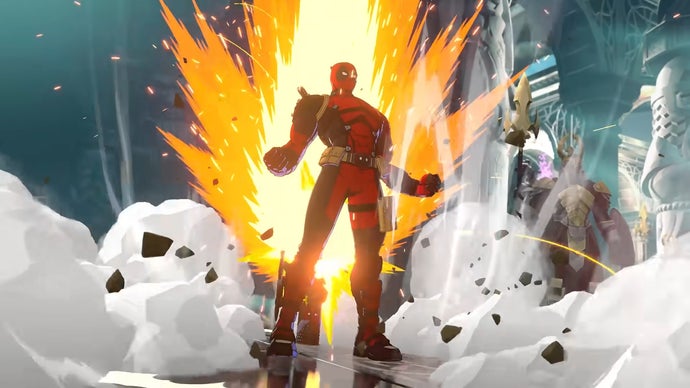
Deadpool is a character designed to be annoying. Creator Rob Liefeld envisioned him as "Spider-Man, except with guns and swords, and a jackass." In most appearances, Wade Wilson's fourth-wall-breaking meta-awareness drives endless jokes about Marvel editorial, celebrity drama, comic history, and anything else within reach. The X-Men and Avengers tolerate his relentless quips as part of his character, but audiences have had mixed reactions to this approach across comics, games, and film.
The 2013 Deadpool game by High Moon Studios and Ryan Reynolds' 2016 film pushed this trait to extremes, with instantly dated references and smug commentary that often grated rather than amused. Nolan North's performance in Ultimate Marvel vs Capcom 3 offered a middle ground, keeping Deadpool irreverent while focusing on Marvel and Capcom history alongside occasional fighting game community in-jokes like "WHERE YO CURLY MUSTACHE AT?" directed at Magneto.
Marvel Tōkon: Fighting Souls, developed by Arc System Works, recalibrates Deadpool entirely. Rather than referencing all of media, he specializes in fighting game knowledge. The in-universe explanation places a strategy guide in his hands (which he reads during his block animation), transforming his moveset, voice lines, win screens, and portrait into a love letter to the genre. North returns to voice the character, a crucial decision that grounds his performance in earnestness.
The references span breadth and depth. Deadpool borrows Cell's intro animation, Kazuya Mishima's Electric Wind God Fist, May's Totsugeki dolphin attack, E. Honda's butt slam, Doctor Doom's Foot Dive, Johnny Cage's nut punch, Captain Sawada's Hara-Kiri from Street Fighter: The Movie: The Game, and Guilty Gear's Roman Cancel mechanic entirely ported for his exclusive use. His Deadpool Corps super opens with Sol Badguy's Volcanic Viper (renamed "AQUATIC VIPER" with dolphin included), closing with a simulated opponent ragequit followed by Dio Brando's timestop. In the Japanese version, Takehito Koyasu, Dio's voice actor, performs the role.
Mechanically, many of these Fourth Wall Attacks activate only while Deadpool recovers from damage, self-inflicted or otherwise. Optimal play requires intentionally taking hits to access his most powerful tools, inverting standard fighting game design to fit his healing factor and willingness to suffer. His Fever Dream super variations include Wade screaming "LET'S GO, WADE!" during his own EVO Moment 37 recreation, a recreation of Justin Wong's infamous 'friend zone' photo, and Kazuya dropping his father off a cliff.
What distinguishes Tōkon's approach is its affection over mockery. The references never punch down at individuals or works; they celebrate fighting game history and culture. Arc System Works' depth of knowledge demonstrates genuine reverence for the genre they've worked in for decades while honouring Deadpool's mechanical identity. The result reframes a character typically defined by grating meta-commentary into something unexpectedly earnest and joyful, proving that when reverence guides the work, even the merc with a mouth can win over skeptics.
Sources
- Rock Paper ShotgunEstablished publication · recorded Sep 30, 2026The importance of being earnest: How Marvel Tōkon's Deadpool trades ridicule for fighting game reverence