
European Commission proposes EU Kids Act with stricter age verification for online games
The European Commission has drafted legislation that would require online games to implement tiered account systems and age verification for players under 15, with enforcement funded by supervisory fees on companies.

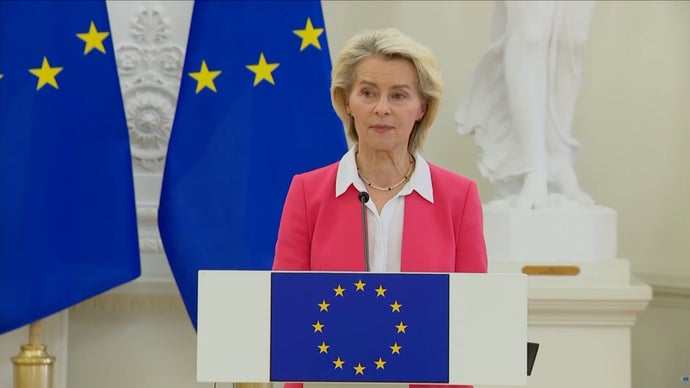
The European Commission has drafted a proposal called the EU Kids Act that would impose new account restrictions and age verification requirements on online video games, social media platforms, video sharing services, and AI chatbots. According to documents seen by Politico and Reuters, the legislation would create a tiered system governing what types of accounts children under 15 can create to access these services.
Under the proposed rules, children under 13 would only be permitted accounts for services deemed to meet strict safety standards, with those accounts fully controlled by parents or guardians. Users aged 13 to 15 would need a parent to open an introductory account that includes parental controls and limits on communication and screen time. Only those over 15 could set up their own accounts, while children under three would be barred from access entirely.
The proposal would likely require adults to prove their age through established methods such as credit card ownership, official identity documentation, or video-based facial age estimation. Enforcement would be funded through supervisory fees levied on companies. The Netherlands and Spain reportedly pushed for the legislation to cover online games and AI bots in addition to the original focus on social media and video sharing platforms.
The Commission stated in its proposal document that "the Union's approach should allow minors to benefit from the huge potential of digital services, while protecting them from abuse and exploitation" and that "it needs to limit the access of tech companies to our children, and not the other way around." However, the act remains a proposal subject to scrutiny and potential changes by European governments and the European Parliament. A clear definition of what constitutes a "high-risk" service for children has not yet been established, and the rollout of age verification initiatives continues to face pushback over data protection and anonymity concerns.
Sources
- Rock Paper ShotgunEstablished publication · recorded Sep 16, 2026European Commission's proposed EU Kids Act could see online games forced to enact stricter age verification amid new rules around accounts for under 15s