
Control Resonant PS5 Review: Remedy's Wildly Inventive Sequel Stumbles in Combat
Control Resonant switches to an open-world Manhattan transformed by supernatural horror, featuring inventive traversal and gorgeous visuals that outshine its repetitive combat system.

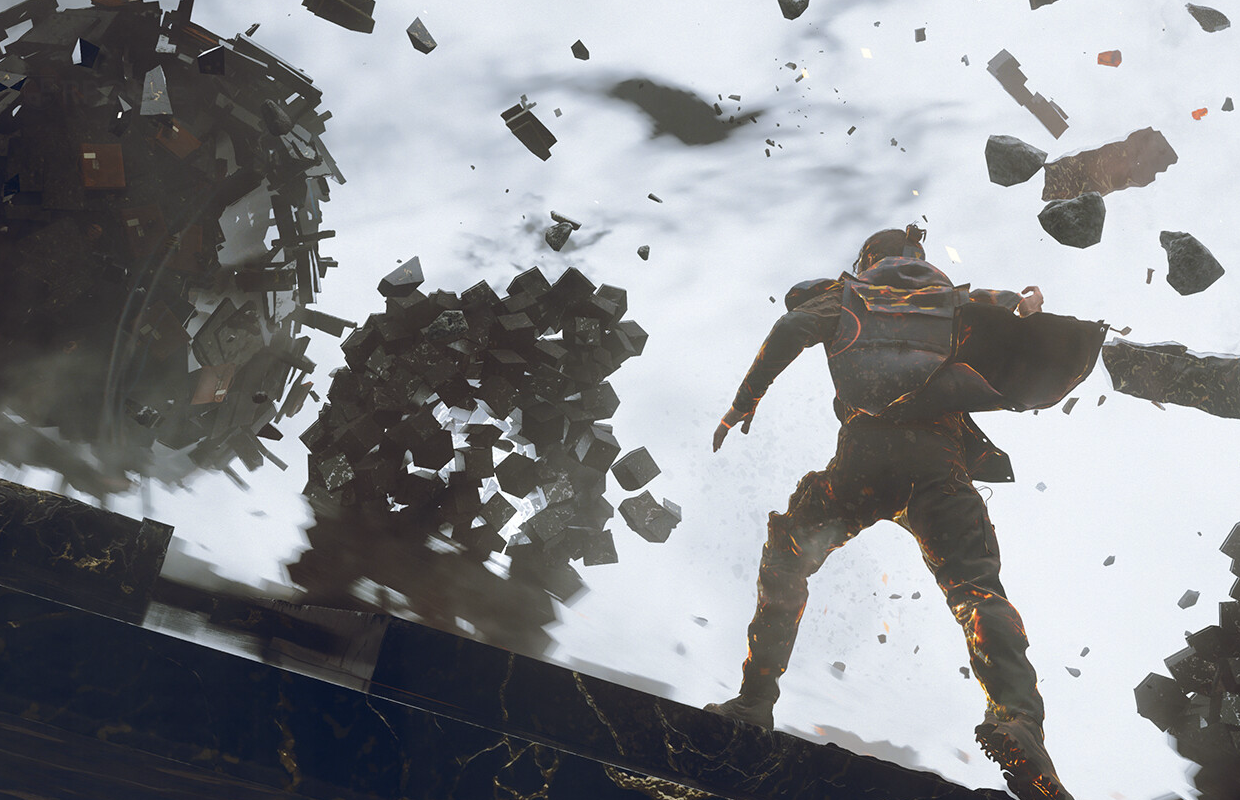
Remedy Entertainment's Control Resonant launches as a boldly reimagined sequel that transforms the Remedy Connected Universe into an open-world experience. Seven years after the original Control, players take on the role of Dylan Faden, Jesse's brother and the parautilitarian whose Hiss possession inadvertently triggered the supernatural invasion that defined the first game. Waking from a lengthy coma, Dylan discovers that The Hiss have broken containment from The Oldest House and invaded Manhattan's streets, while a new phenomenon called Patterning has twisted the city into an Inception-like kaleidoscope.
The visual presentation stands as Resonant's greatest achievement. Manhattan appears drop-dead gorgeous in its twisted, malformed state, with roads folding at 90-degree angles, entire cityscapes consumed by blue mould, and environments that rank among the best-looking on the PS5. The Push Square reviewer noted playing on PS5 Pro in performance mode with no frame rate dips and an incredibly sharp image, while the base PS5 version appears fuzzier with occasional frame rate dips during intense fights. The DualSense haptics receive particular praise, especially in moments when the mysterious Board speaks.
What elevates Resonant beyond pure aesthetics is how the folding city integrates into core mechanics. Dylan gains access to a double jump, short flight segments, and a gravity shift ability that lets players latch onto new axes of gravity, transforming vertical space into a puzzle and traversal playground. The RPG Site reviewer called the traversal system their favorite since Insomniac's Spider-Man in terms of pure game feel, particularly praising how the gravity mechanics integrate into level design across exploration and combat alike.
The narrative shifts toward a more personal story than the original. Dylan's relationship with his sister Jesse becomes central, addressing questions left unanswered in the first game. The game explores Dylan's guilt and desire for redemption following his role in The Hiss invasion, diving into themes of penance, regret, and forgiveness. While character animations can feel stiff at times, the storytelling quality remains strong. Conversations that plagued the first Control, lengthy chats with expressionless NPCs, have largely been replaced with snappier in-person interactions and radio-based communication.
Resonant's 25-hour campaign emphasizes exploration-based storytelling rather than linear narrative. The world splits into large explorable zones that connect but largely function independently, allowing players to experience most story and side content in any order. Quirky side quests showcase Remedy's trademark weirdness, ranging from mini-investigations like tracking headless bodies appearing across Manhattan to absurdist scenarios like freestyling a karaoke song to save a crowd possessed by a malfunctioning machine.
Combat represents Resonant's biggest departure from previous entries, and its most divisive element. The service weapon from the original gives way to a transformable melee weapon system. Players equip two weapon styles mapped to Square and Triangle, each offering three forms to choose from. Combinations can pair sweeping scythes with heavy-hitting hammers, axes with pinpoint spears, or dual blades with whips. A combo finisher system with its own mini skill trees adds further customization.
Combat initially feels deeper than it ultimately proves. Across the first half, the system has solid feedback, and players can respec to find their preferred playstyle. Skill points steadily arrive to boost stats and expand movesets. When paired with aggressive enemy encounters and the game's traversal capabilities, combat sometimes excels. Optional Resonant boss fights throughout each level unlock game-changing damage-type abilities.
The system falters toward the campaign's end. Skill upgrades dry up while enemy health bars balloon to tedious lengths, creating a stale, repetitive feel. The combat's depth relies heavily on damage effects and their synergies, yet the game underexplains these mechanics. Push Square's reviewer noted that despite the system's theoretical complexity, it often devolves into spamming the same combo finishers. Final bosses particularly struggle, nearly killing the game's momentum. The RPG Site reviewer confirmed this combat represents Remedy's first action-RPG venture but noted the emphasis throughout remains on storytelling and unique gameplay experiences rather than deep combat mechanics.
Progression encourages exploration through an innovative zone-leveling system. Rather than leveling Dylan directly, everything players do in a specific zone grants experience to that zone itself, whether through combat, treasure hunting, or quests. Zone level-ups unlock perks like upgraded merchants and treasure spot reveals, while also granting talent points for Dylan's skill tree. Many side quests unlock relics providing various buffs and bonuses, creating what the RPG Site reviewer called one of the most rewarding progression systems in open-world gaming.
The world design avoids feeling overwhelming, stringing discoveries at a steady pace despite New York's decimated human population. Hundreds of scattered notes dive into lore, hinting at rival organizations to the FBC that may set up future entries. The city feels twisted and deformed rather than lifeless and empty.
Control Resonant emerges as an impeccably confident sequel bearing all hallmarks of a Remedy classic. It's endlessly stylish and playful, addressing many criticisms of the original Control while maintaining the studio's distinctive voice and visual identity. Repetitive combat and pacing wobbles in the final act represent the primary drawbacks, though not enough to significantly undermine what Remedy accomplishes with this ambitious open-world reimagining.
Sources
- Push SquareEstablished publication · recorded Sep 18, 2026Review: Control Resonant (PS5) - A Wildly Inventive and Drop-Dead Gorgeous Sequel
- RPG SiteEstablished publication · recorded Sep 18, 2026Control Resonant Review
- GamesRadar+Secondary publication · recorded Sep 18, 2026Control Resonant review: "Deeply weird with wondrous supernatural vistas but bafflingly dull combat"
- GamingBoltSecondary publication · recorded Sep 18, 2026Control Resonant Review – Acceptance
- Video Games ChronicleEstablished publication · recorded Sep 18, 2026Control Resonant review: Remedy gambles on a genre change in one of its most impressive games ever
- PC GamerEstablished publication · recorded Sep 18, 2026Control Resonant review
- RPGamerSecondary publication · recorded Sep 18, 2026CONTROL Resonant Review
- Game InformerSecondary publication · recorded Sep 18, 2026Control Resonant – Review In Progress
- Digital FoundryEstablished publication · recorded Sep 18, 2026Review: Control Resonant: Remedy's Tech Makes the Leap to a Wider Urban Sandbox
- EurogamerEstablished publication · recorded Sep 18, 2026Control Resonant review
- GamingBoltSecondary publication · recorded Sep 18, 2026Control Resonant – Just How Good Does It Look on PS5 Pro and PC?
- Pure XboxEstablished publication · recorded Sep 18, 2026Review: Control Resonant (Xbox) - A Brave And Visually Transcendent Sequel