
Snap Specs Hands-On: Impressive Computer Vision, Disappointing Optics in First-Gen True AR Glasses
Snap's $2,195 Specs deliver groundbreaking positional tracking and hand recognition in a glasses form factor, but optical artifacts, narrow field of view, and low refresh rates reveal the technical limits of current standalone AR hardware.

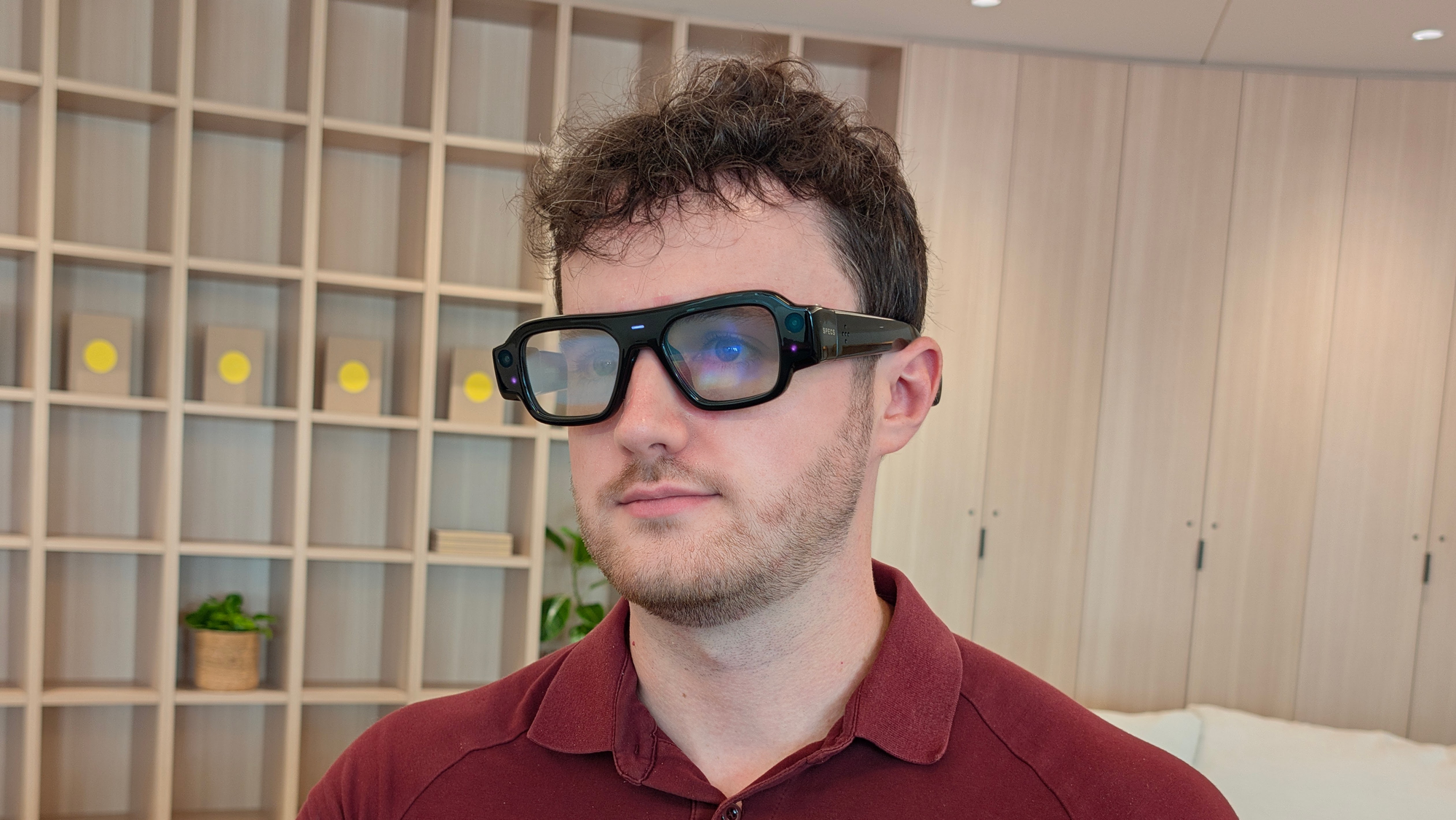
Snap held a launch event for its Specs true AR glasses in Los Angeles, announcing new features including a built-in cross-platform AI assistant and an optional cellular case. CEO Evan Spiegel demonstrated the glasses live on stage, marking a shift from the prerecorded tech presentations that dominate the industry.
Specs are standalone transparent AR glasses priced at $2,195, with preorders already open. They represent the first fully standalone true AR glasses available outside China, and the most advanced consumer transparent AR device currently purchasable, ahead of competitors like Meta and Apple.
In hands-on use, the device reveals both strengths and significant compromises. The most immediate issue is optical quality. A rainbow pattern appears over the display area with poor color uniformity, and blue streaks from light reflections create visual noise. The image is noticeably less crisp than VR headsets and considerably less clear than Meta's Ray-Ban Display HUD.
Field of view presents a more fundamental limitation. At 51 degrees diagonal, it matches HoloLens 2. Critically, Snap renders a larger field of view than the device can actually display, meaning promotional videos and social media content show a wider view than what users see wearing the glasses. This gap creates a misleading impression of the experience. For context, passthrough VR headsets like Quest 3 and Apple Vision Pro exceed 110 degrees diagonally.
The narrow field of view breaks what researchers call object permanence. Virtual objects disappear from view as you look around, forcing users to search for where they went. While this limitation affects all optically transparent AR devices and reflects genuine technical challenges, the industry has not been sufficiently transparent about this constraint for a decade.
At 134 grams, Specs sit at the boundary of the glasses form factor. The device also renders at what appears to be 30 frames per second or lower, significantly below typical VR performance. Snap declined to specify the exact refresh rate. The absence of eye tracking is a notable omission, as Apple Vision Pro has established eye tracking as essential for extended use, and hand-based interaction quickly becomes fatiguing.
Specs' standout capability is computer vision. Positional tracking and hand tracking remained stable even in low light with dozens of people nearby. The device features real-time continuous scene meshing with occlusion, allowing real-world geometry to block virtual content. Achieving this at low power consumption represents a meaningful technical achievement.
Six-degree-of-freedom AR meaningfully improves specific use cases. Translation captions anchored to speakers feel more natural than fixed displays, and navigation maps positioned at chest height are more comfortable than smaller corner displays. Snap's software stack, optimized through years of Lens development, delivers relatively fast loading times without feeling sluggish despite the low refresh rate.
Snap positions Specs as a computer for virtual monitors and browser interfaces. While the device could serve as a portable private display for video on transit, the optical artifacts and limited field of view make it impractical for serious productivity work. Incoming ultralight passthrough VR headsets and prism optic devices like Xreal Aura will likely offer clearer images and wider fields of view.
Snap Specs represent first-generation standalone true AR hardware in 2026, comparable to attempting an iPhone in the late 1990s. Snap's software implementation is well-executed for the available technology, but fundamental optical and computational constraints remain. Early adopters with realistic expectations will find an experience no other device matches. General consumers seeking a refined true AR experience should expect to wait until the 2030s.
Sources
- UploadVREstablished publication · recorded Sep 24, 2026Snap Specs Hands-On: Minimum Viable Consumer True AR Glasses