
Scopely VP Explains How Monopoly Go Teaches Developers to Build Player Communities
Beth Nations, VP of product at Scopely, shares key insights on how Monopoly Go fosters lasting social connections through purposeful gameplay, reciprocity, and companion tools.

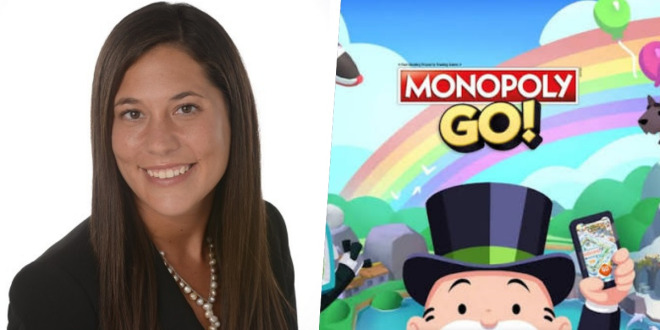
Designing a game that maintains a lasting, highly engaged community requires more than simply adding a friend list or a messaging channel. According to Beth Nations, the vice president of product at Scopely, developers must build social features directly into the core gameplay loop. Reflecting on the immense success of Monopoly Go, Nations shared key design principles that help players build genuine connections and establish daily playing rituals.
A primary lesson from the development of Monopoly Go is that social interactions must have a direct gameplay purpose. Nations pointed to sticker trading as a prime example of this principle. Since players cannot easily complete their collectible albums entirely on their own, duplicate stickers become valuable assets that can be exchanged. This dynamic creates mutual utility. Helping another player provides visible value, and recipients are likely to reciprocate in the future, turning what could be an individual achievement into a shared victory.
Nations noted that engagement in Monopoly Go is significantly stronger when a player has five or more active friends in the game. To support these networks, the game relies on bite-sized, low-pressure interactions. Short activities such as opening a community chest together, contributing to a partner event, or exchanging an emoji after a bank heist allow players to stay connected. These short interactions help siblings in different countries, coworkers on breaks, and couples at the end of the day keep in touch.
Rather than designing around passive visibility, where players merely post achievements and tally views, games succeed by emphasizing active reciprocity. Whether players are contributing to shared event goals or taking turns supporting one another, the sense of mutual progression makes the gameplay feel highly consequential. Furthermore, friendly friction in the form of lighthearted competition, such as blocking progress or initiating bank heists, adds memorable tension because players understand the shared, playful context of the game.
As communities grow, they often require more robust external communication platforms. Recognizing that players were seeking more advanced ways to coordinate, Scopely developed and released the standalone Monopoly Go Chat app in direct response to user requests. Following its launch in March 2026, the application quickly became the most-downloaded free app in the United States, Canada, France, Germany, the United Kingdom, and Italy. Players use the dedicated companion app to coordinate sticker trades, plan strategies for live team events, and continue social conversations sparked by their in-game experiences.
Sources
- PocketGamer.bizEstablished publication · recorded Sep 12, 2026What Monopoly Go can teach developers about building lasting player communities