
ByteBrew and The One Game Studio Detail Cross-Promotion ROAS and Ad LTV Gains
A new case study from Game World Observer outlines how mobile publisher The One Game Studio utilized ByteBrew Ads to achieve a 170 percent D1 ROAS and an ad LTV lift across its portfolio.

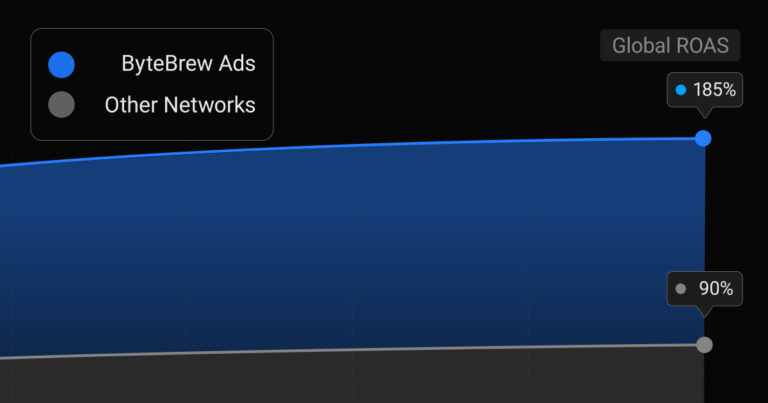
Hanoi-based mobile game publisher The One Game Studio partnered with ByteBrew to address challenges in audience routing across its extensive portfolio of casual, music, and puzzle titles. Kian Hozouri, COO and co-founder of ByteBrew, detailed the collaboration in a Game World Observer column. The studio manages a catalog of over 70 fast-iterating, ad-monetized games featuring a growing team of more than 60 employees. Facing a challenge where user acquisition was heavily concentrated in a few top titles while higher-LTV games reached only a fraction of that audience, the publisher tested ByteBrew Ads, powered by Ctrl AI.
Ctrl AI is designed to evaluate user value and opportunity cost in real time during every ad opportunity. The technology identifies high-value users in a source app and routes them to a higher-LTV destination app within the same portfolio. Pre-trained on petabytes of live app data, the system bypasses traditional optimization periods to route players from day one while allowing standard mediation flows to continue when campaign targets are not met.
According to the published case study, the global campaign achieved a D1 ROAS of 170 percent, reaching profitability on the first day. Users routed through the system delivered a 1.26x user Ad LTV in the destination application compared to the source app. Additionally, these users produced 1.4x Ad eCPM per impression in the destination application and retained at 1.6x the destination blended Day 1 rate.
The system acquired users across more than 100 countries at an average cost per install of $0.04. This delivered up to 2.5x greater efficiency than open-market user acquisition, even in higher-priced markets where acquisition costs were more than 2.5 times lower than open-market alternatives. Destination gains reportedly exceeded source opportunity costs on a fully amortized basis, increasing overall portfolio ad value as new applications came online.
Sources
- Game World ObserverEstablished publication · recorded Sep 15, 2026Case Study: How The One Game Studio Hit 170% D1 ROAS and Achieved a 1.26x Ad LTV Lift with ByteBrew Ads