
Why Game Companies Continue to Focus on the Growing MENA Games Market
Industry reports highlight strong growth, a young population, and expanding revenue across the Middle East and North Africa games sector.

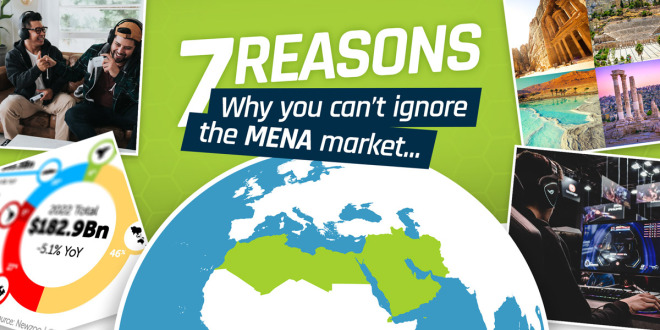
Game companies are increasingly paying attention to the Middle East and North Africa market due to strong projected market growth, large audiences, and untapped talent pools. The regional games market momentum involves scale, diversity, and growth, particularly in mobile, esports, and community-based games. Success in the region requires understanding local cultures, regulatory landscapes, and practical nuances.
One of the significant strengths of the MENA market is its demographics. Nearly 50 percent of the population is under the age of 25, forming a young and tech-savvy audience that uses mobile games as a medium for entertainment and social connection. Furthermore, the MENA region continues to outpace global market growth, with players and revenue on the rise across Saudi Arabia, the United Arab Emirates, and Egypt. Specifically, the MENA-3 region generated $2 billion in games revenue in 2024, marking a 5.4 percent year-on-year increase. Projections suggest this figure will reach $2.8 billion by 2029, alongside growth to 84.3 million players over a five-year period. Across the broader Middle East, predicted growth spans from $4.56 billion in 2024 to $9.57 billion by 2030.
Mobile platforms drive a large majority of games revenue in many MENA countries, supported by institutional backing for infrastructure and technology aimed at establishing the region as a global innovation hub. An increasing middle class and higher disposable incomes have also boosted players' spending power, leading to rising average revenue per user. Monetisation models benefit from in-app purchases, subscriptions, and esports.
Governments across the region are actively nurturing local talent by treating games, tech, and esports as strategic industries. Initiatives such as The Gaming Lab and Jordan's National Strategy for Games and Esports, combined with specialised educational programmes at institutions like HTU and DigiPen, have fostered a skilled workforce. Additionally, industry observers note unique opportunities in localisation. Adapting content to native languages, cultural references, and regional payment habits provides a distinct advantage for companies entering the market.
To help build connections within this sector, Pocket Gamer Connects is scheduled to hold an event in Amman on November 7 and 8, offering two days of business-to-business conferencing and industry insights.
Sources
- PocketGamer.bizEstablished publication · recorded Sep 29, 2026Why you still can’t afford to overlook the MENA market