
Arm Introduces Robotics Capability Framework to Establish Common Language for Intelligent Systems
Arm has proposed a Robotics Capability Framework designed to provide a shared language for describing robotic systems, operating contexts, and safety expectations across the industry.

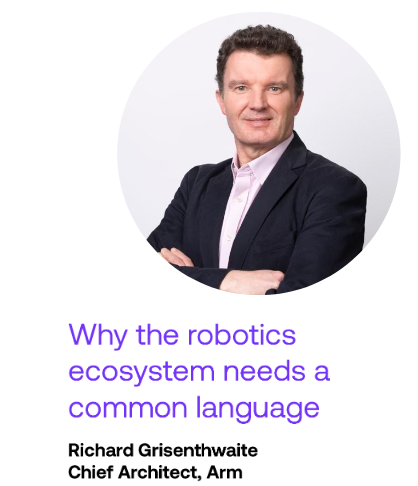
Arm has announced the introduction of the Robotics Capability Framework, an architecture-agnostic reference framework intended to create a common way to describe robotic capabilities, operating contexts, supervision, and assurance. Richard Grisenthwaite, chief architect at Arm, issued a manifesto outlining the initiative, subtitled "Why the robotics ecosystem needs a common language." Grisenthwaite stated that the next phase of robotics requires more than advances in artificial intelligence and compute alone. He noted that the industry needs a shared foundation allowing intelligent robotic systems to be described consistently without limiting innovation.
According to Arm, terms such as autonomous, intelligent, adaptive, collaborative, contextual, and self-improving are currently used across the robotics conversation without consistent meaning across vendors, use cases, operating environments, or supervision models. This lack of consistency makes robotic systems harder to compare, integrate, and assess, while creating friction across the ecosystem. Customers need a greater understanding of available system capabilities, while regulators and insurers require clearer methods to understand capability and risk.
The framework is designed to make capability claims easier to understand, systems simpler to compare, and assurance expectations clearer, while preserving the freedom for companies to innovate. Arm stated that the initiative is not intended to be an Arm-only project. The company invited robotics firms, developers, customers, regulators, researchers, and industry partners to help shape the framework into a trusted foundation. Syed Alam, a partner at McKinsey and Company, noted that scaling robotics requires greater industry alignment regarding technical capabilities, compatibility, safety, security, and regulatory considerations.
Grisenthwaite pointed out that robotics is advancing along two primary axes: scale and capability. Data from the International Federation of Robotics indicates that there are more than 4.28 million industrial robots operating in factories worldwide, with annual installations exceeding half a million units for three consecutive years. Simultaneously, advances in artificial intelligence, sensing, compute, and software are expanding what robots can perceive, reason about, and execute in real-world environments. Without common terminology, fragmented definitions risk hardening into market structures as deployment accelerates.
Sources
- GamesBeatEstablished publication · recorded Sep 10, 2026Robotics Capability Framework: A Common Foundation for the Next Era of Intelligent Robotics | Arm